Hey there! As a 4x4 wheels supplier, I've been getting a ton of questions lately about how a 4x4 wheel system distributes power. So, I thought I'd break it down for you in this blog post.
First off, let's talk about what a 4x4 wheel system is. In simple terms, a 4x4 vehicle has four wheels, and all of them are powered. This is different from a 2x4 system, where only two wheels are powered. The main advantage of a 4x4 system is that it provides better traction and control, especially in off - road or slippery conditions.
The Basics of Power Distribution
At the heart of a 4x4 power distribution system is the transfer case. The transfer case is like the traffic cop of the power flow in a 4x4 vehicle. It takes the power from the transmission and distributes it to both the front and rear axles.
When you're driving on normal roads, most 4x4 vehicles can operate in 2 - wheel drive mode. In this mode, the transfer case sends power only to either the front or the rear wheels (depending on whether it's a front - wheel - drive or rear - wheel - drive based 4x4). This helps save fuel because you're not powering all four wheels when you don't need to.
But when you hit rough terrain or need more traction, you can switch to 4 - wheel drive. There are two main types of 4 - wheel drive systems: part - time and full - time.
Part - Time 4x4 Systems
Part - time 4x4 systems are common in many off - road vehicles. In this system, when you engage 4 - wheel drive, the transfer case splits the power evenly between the front and rear axles. It's a simple and robust setup, but it's designed mainly for off - road use.
The reason for this is that in a part - time 4x4, the front and rear axles are locked together. On a hard - surfaced road, the front and rear wheels need to rotate at different speeds because they follow different paths when turning. When the axles are locked in a part - time 4x4, it can cause drivetrain binding if you try to turn on a hard surface. So, you should only use part - time 4 - wheel drive on loose or slippery surfaces like mud, snow, or gravel.
Full - Time 4x4 Systems
Full - time 4x4 systems, on the other hand, are more versatile. They can be used on both on - road and off - road conditions. These systems use a center differential in the transfer case. A differential allows the front and rear axles to rotate at different speeds, which is essential for smooth turning on hard surfaces.
The center differential distributes power between the front and rear axles based on the traction available. For example, if the rear wheels start to slip, more power can be sent to the front wheels. Some full - time 4x4 systems also have a locking feature for the center differential. When the center differential is locked, it's similar to a part - time 4x4, with power evenly split between the front and rear axles, providing maximum traction in extreme off - road situations.
Axle - Level Power Distribution
Once the power reaches the front and rear axles, it needs to be distributed to the individual wheels on each axle. This is where the axle differentials come in.
Open Differentials
Most vehicles come with open differentials on the axles. An open differential allows the two wheels on an axle to rotate at different speeds when turning. When you turn a corner, the outer wheel has to travel a longer distance than the inner wheel, so it needs to rotate faster. The open differential makes this possible.


However, the downside of an open differential is that if one wheel loses traction (for example, if it's in mud or on ice), most of the power will go to that wheel because it has less resistance. This can leave the other wheel with good traction with very little power, and the vehicle may get stuck.
Limited - Slip Differentials
To overcome the limitations of open differentials, many 4x4 vehicles use limited - slip differentials (LSD). An LSD tries to balance the power between the two wheels on an axle. When one wheel starts to slip, the LSD transfers some of the power to the wheel with more traction.
There are different types of LSDs, such as mechanical, viscous, and electronic. Mechanical LSDs use clutches or gears to transfer power, while viscous LSDs use a viscous fluid to control the power transfer. Electronic LSDs are the most advanced and can adjust the power distribution based on various sensors in the vehicle.
Locking Differentials
For the ultimate in traction, some 4x4s are equipped with locking differentials. A locking differential can lock the two wheels on an axle together, so they rotate at the same speed. This is extremely useful in off - road situations where you need maximum traction.
When the differential is locked, both wheels receive equal power, regardless of the traction conditions. However, like part - time 4 - wheel drive, locking differentials are mainly for off - road use because they can cause handling problems on normal roads, especially when turning.
Our 4x4 Wheels and Power Distribution
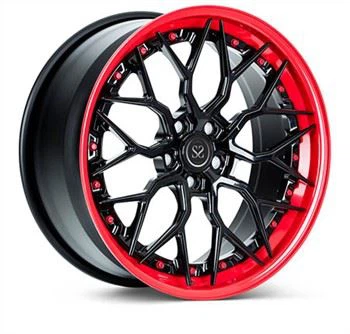
As a 4x4 wheels supplier, we understand how important it is to have the right wheels for your 4x4 system. The right wheels can enhance the performance of your power distribution system.
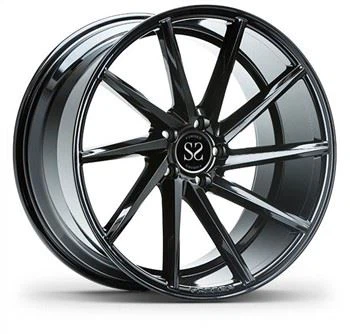
For example, if you have a high - performance 4x4 with a full - time 4x4 system that's used mainly on - road, you might want to consider our Gloss Black 19inch Staggered Forged Alloy Wheels 5x120 For MBW X3. These wheels are not only stylish but also lightweight, which can help improve the overall handling and efficiency of your vehicle's power distribution.
If you're an off - road enthusiast with a part - time 4x4, our 1 Pieces Forged Wheel Can Be Customized For Centre Lock Deep Hole Wheel could be a great choice. These wheels are designed to be strong and durable, able to withstand the harsh conditions of off - road driving and work well with the part - time power distribution system.
And for those who own luxury 4x4s like the Aston Martin DBX, our Aston Martin DBX Custom Forged Aluminum Alloy Rims Satin Black 22 Inch 5x128 are a perfect match. They are specifically designed to complement the high - end power distribution and performance capabilities of such vehicles.
Conclusion
In conclusion, a 4x4 wheel system distributes power in a complex but well - thought - out way. From the transfer case that splits power between the front and rear axles to the differentials that distribute power to individual wheels, every component plays a crucial role in providing traction and control.
Whether you're a casual driver looking for better performance on snowy roads or an avid off - road adventurer, understanding how your 4x4 power distribution system works can help you make the most of your vehicle. And if you're in the market for new 4x4 wheels, we've got you covered with a wide range of options to suit different power distribution systems and driving needs.
If you're interested in our 4x4 wheels or have any questions about how they can work with your vehicle's power distribution system, don't hesitate to reach out. We're here to help you make the best choice for your 4x4.
References
- Motor Trend Magazine: Various articles on 4x4 technology and power distribution
- Car and Driver: In - depth reviews of 4x4 vehicles and their drivetrain systems
- SAE International: Technical papers on automotive power distribution systems